What Kind of Board Should You Use Under Watercolor Paper?
What beginners should know
A board should be flat, water-resistant, lightweight and larger than the paper. Sealed hardboard, acrylic sheet or purpose-made drawing boards are common practical options.
A useful workspace does not need to look like a professional studio. It needs stable water, comfortable reach, suitable light and protection for paper and furniture. Set up the same way each time, then adjust one inconvenience at a time. Consistency makes a temporary table or small corner much easier to use.
For everyday watercolor use, JusArt Low-Tack Artist Tape for Watercolor Paper can make sense when you need a low-tack tape for securing paper to a board with less surface damage.
A practical checklist
- Keep water stable and away from electronics.
- Arrange frequently used supplies within comfortable reach.
- Leave enough clear space around the paper to work safely.
Try this today
Set up one normal painting session and take a photograph before starting. Afterwards, note anything that was awkward to reach, unstable or poorly lit, then change only those parts.
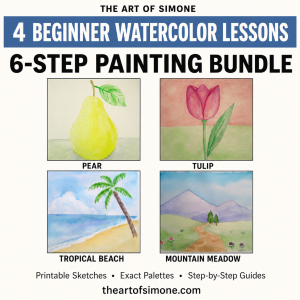
If you want structure for your next painting session, the $27 Beginner Watercolor Bundle provides four guided projects from sketch to final details.
The bottom line
A small, dependable collection is easier to understand and maintain than a crowded one. Choose supplies deliberately, care for them consistently and let your real needs guide future purchases.
Another supply that can support this approach is MEEDEN 100% Cotton Watercolor Paper Block — 9 × 12, which provides a cotton block whose glued edges help reduce buckling.
Helpful Watercolor Supplies
Recommended supplies for this watercolor task:
- JusArt Low-Tack Artist Tape for Watercolor Paper — low-tack tape for securing paper to a board with less surface damage.
- MEEDEN 100% Cotton Watercolor Paper Block — 9 × 12 — cotton block whose glued edges help reduce buckling.