Which Side of Watercolor Paper Should You Use?
What beginners should know
Many mould-made sheets have a slightly more textured felt side and a smoother reverse. Either side can be painted on; test both and use the surface that suits the look and handling you prefer.
Paper affects how water moves, how long the surface stays workable and how well it survives corrections. Brand names alone do not guarantee a perfect match, so compare fibre, weight, texture and format. Keep notes on the paper used for each painting; that simple habit makes results easier to understand and future purchases more deliberate.
To keep the choice simple, consider Arches Cold-Press Watercolor Pad — 9 × 12, 140 lb for a 100% cotton cold-pressed paper for finished work and repeated washes.
A practical checklist
- Check the paper weight and fibre content before buying.
- Buy a small quantity before committing to a large pack.
- Store every sheet flat and protected from moisture.
Try this today
Before buying more, cut or label samples of the papers you already own. Record the weight, fibre and surface, then note which one felt easiest to use. This turns a vague preference into information you can use when shopping.
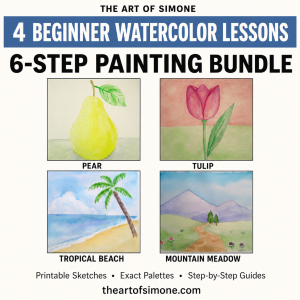
The $27 Beginner Watercolor Bundle helps you move from choosing supplies to completing four paintings with clear sketches, palettes and six-step instructions.
The bottom line
A small, dependable collection is easier to understand and maintain than a crowded one. Choose supplies deliberately, care for them consistently and let your real needs guide future purchases.
For a second choice, Fluid 100 Watercolor Paper Block — Hot Press, 9 × 12, 140 lb, 100% Cotton is worth considering for a smooth 100% cotton hot-press block for direct comparison with cold-pressed paper.
Helpful Watercolor Supplies
Two supplies that fit this topic:
- Arches Cold-Press Watercolor Pad — 9 × 12, 140 lb — 100% cotton cold-pressed paper for finished work and repeated washes.
- Fluid 100 Watercolor Paper Block — Hot Press, 9 × 12, 140 lb, 100% Cotton — smooth 100% cotton hot-press block for direct comparison with cold-pressed paper.